
Service
Garden Pruning Pakenham
Garden pruning across Pakenham and Cardinia — shrubs, roses, natives, ornamentals and small trees cut in the right season, at the right point, so plants stay healthy and beds look cared for.
- Pricing
- Free, no-obligation quote
- Typical duration
- 3 – 8 hours
- Frequency
- Seasonal
The benefits
Why clients book it
- 4
- Seasonal windows
- Root
- Weeding, not topping
Cut in season
Roses, natives and ornamentals timed so the flowers stay.
Structure before shape
Deadwood and congestion come out first, then form.
Beds left finished
Weeded to the root, cultivated and topped up with mulch.
How we approach it
Garden Pruning, done to a standard
The right cuts at the right time of year for roses, natives, shrubs and small trees.
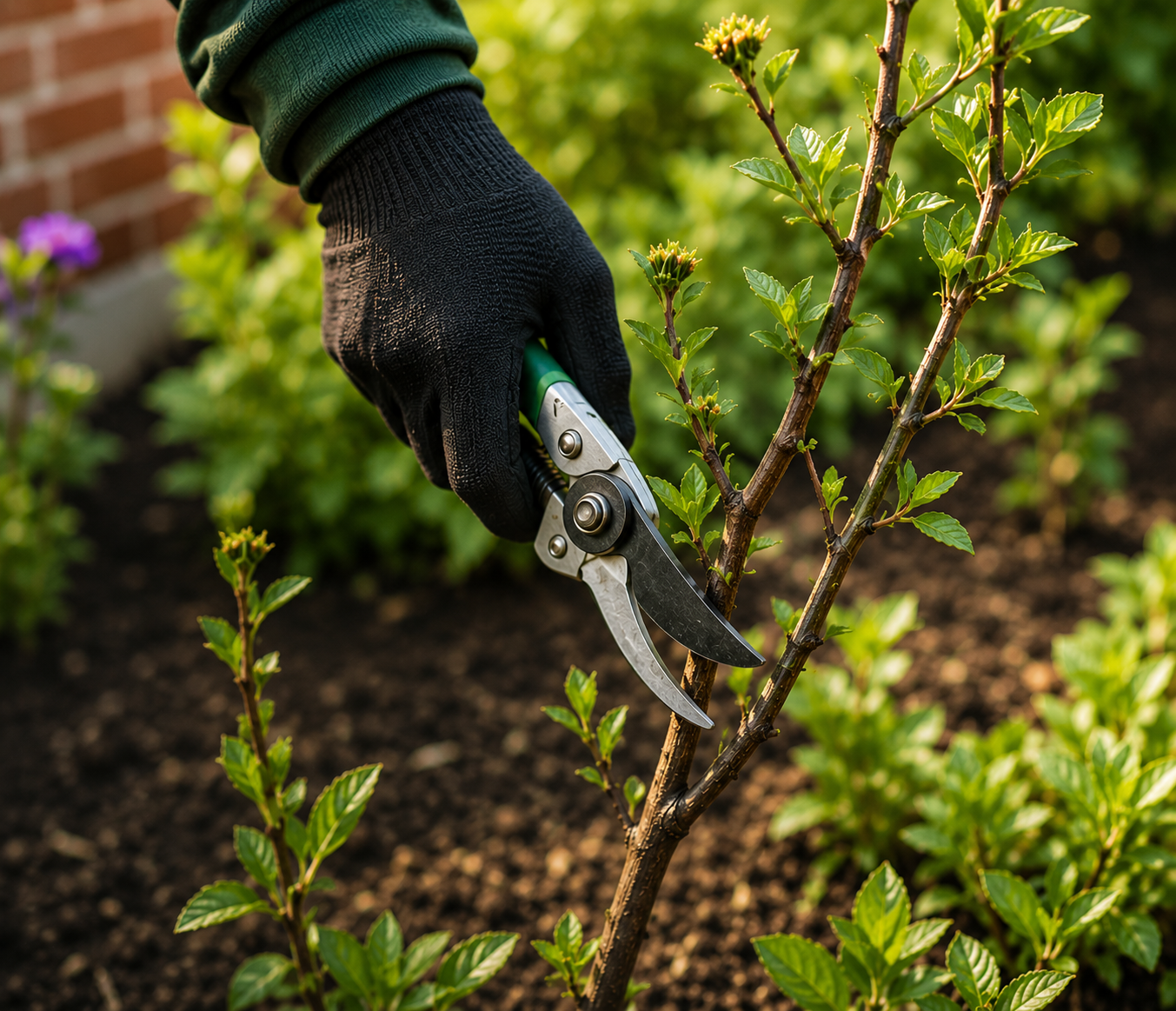
Pruning is the part of garden maintenance most often rushed, and it's the part with the longest memory. A hedge grows out of a bad trim in a season; a shrub or small tree carries a bad cut for years. So we treat it as skilled work: identify the plant, decide what it needs this season, then make deliberate cuts in the right places.
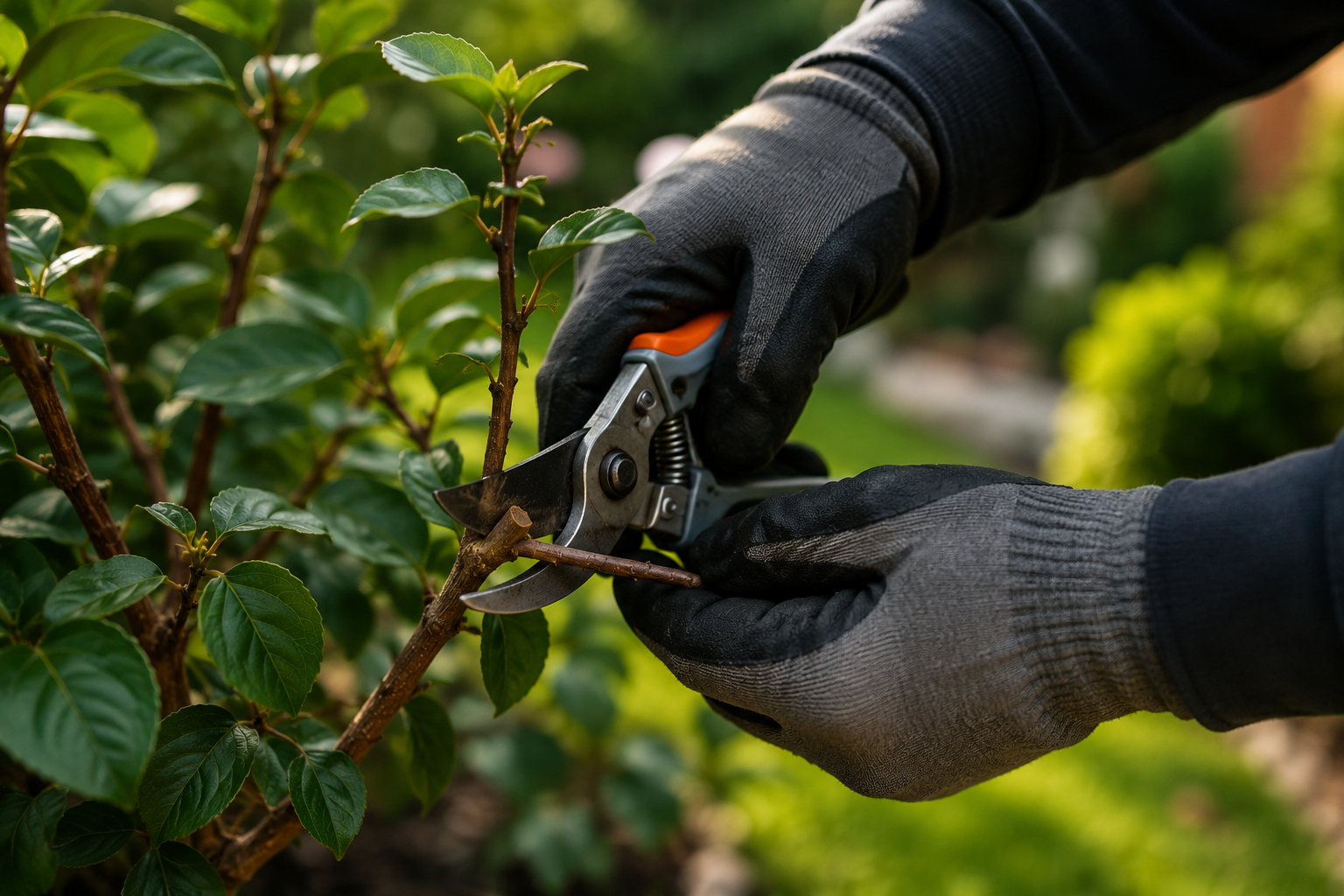
Every cut is made just above a healthy outward-facing bud or back to a branch collar — never into the collar itself, and never leaving a stub. That's what lets the wound seal quickly instead of sitting open for pests and fungal spores. Deadwood, crossing limbs and congested centres come out first, so the plant is structurally sound before anyone worries about shape.
Timing decides whether you keep your flowers. Spring bloomers set their buds on last year's wood, so they're pruned straight after flowering. Summer bloomers and roses are cut in the cooler months while they're dormant. Natives such as grevillea, callistemon and westringia are tipped lightly and often rather than cut hard once. Fruit trees are shaped in winter, with a light summer tidy to hold size.
We work across shrub borders, feature plantings, climbers and standards, plus small trees and structural growth we can reach safely from the ground. Anything needing climbing, rigging or chainsaw work at height goes to a qualified arborist — we'll tell you when that's the case. Beds are left finished: weeded by root, lightly cultivated, mulch topped up and all green waste taken away the same day.
What's included
Structural pruning
Deadwood, damaged limbs, crossing branches and congested centres removed so the plant carries its weight properly.
Species-correct timing
Roses, natives, ornamentals, hydrangeas and fruit each pruned in their own window so you keep next season's flower.
Growth and size control
Shrubs and small trees held at a workable size before they crowd paths, windows, fences and neighbouring plantings.
Shaping and form
Natural form restored on informal plantings; clean lines held on standards, balls, climbers and espaliers.
Disease and pest checks
Borer, scale, sooty mould, black spot and dieback flagged, with infected material bagged separately rather than mulched.
Safety pruning
Low limbs over paths and driveways lifted, growth cleared off gutters, lights, meter boxes and sightlines.
Bed weeding and cultivation
Weeds taken by root, soil lightly cultivated where it has compacted, edges tidied against turf.
Mulch top-up and clean down
Mulch levels restored to hold summer moisture, surfaces blown clean and all prunings removed the same day.
Plant health
Why pruning is the highest-value hour you spend in a garden
Pruning isn't tidying. It's how you decide what a plant puts its energy into — leaf, flower, fruit or repair — and it's the difference between a garden that improves each year and one that slowly closes in on itself.
Start with what comes out. Dead, damaged and diseased wood is the first material to go, every time. Dead branches are where borer, fungal spores and rot establish, and they're the ones that snap in a hot northerly. Removing them takes the pressure off the rest of the plant and stops a small problem quietly spreading through healthy growth.
Then there's congestion. Branches that cross and rub open wounds on each other, and a crowded centre holds humidity long after rain — perfect conditions for black spot on roses, mildew on hydrangeas and dieback in ornamentals. Opening the middle of a shrub so light and air move through it prevents more disease than any spray program does, and the plant repays it with growth that's stronger rather than just longer.
Flowering is where timing earns its keep. Every plant sets buds on a schedule: some on wood grown last year, some on this season's new growth. Prune with that in mind and you get more flower on shorter, better-supported stems. Prune blind and you can remove a whole season of bloom in ten minutes. And because a cut just above an outward-facing bud pushes growth outward, pruning is also how you steer a plant away from a path, a window or a neighbour's fence instead of fighting it later.
Growth control matters more in Pakenham and Cardinia than people expect. Our wet spring and warm autumn give shrubs two strong growth flushes a year, so a plant that suited its spot in March can be over the path by December. Consistent seasonal pruning keeps size in check with light cuts, rather than the hard reduction that leaves bare wood exposed through summer.
Stronger, healthier plants
Removing dead and diseased wood stops rot, borer and fungal problems using it as a way into the rest of the plant.
More flower, more fruit
Pruned in its own season, a plant channels energy into fewer, stronger flowering shoots instead of excess leaf.
Disease prevention
Opening congested centres improves airflow, dries foliage faster after rain and cuts black spot, mildew and dieback right back.
Size kept where you want it
Regular light cuts hold shrubs and small trees at a workable size, so you never need a drastic reduction.
A safer garden
Brittle limbs over paths, driveways and play areas taken out, and growth cleared off gutters, lights and sightlines.
Gardens that read as cared for
Defined plants, clear beds and topped-up mulch are what make a garden look designed rather than simply grown.
Common problems
The pruning problems we're called out for most
Nearly every garden pruning enquiry we take is one of these. All are fixable — some in a visit, some over a season of staged work.
“Shrubs have swallowed the paths and windows”
We reduce back to sound growth with cuts to outward-facing buds, so new growth heads away from the house instead of back at it.
“Plants are leggy with bare bases”
Usually too much old wood and too little light. We thin the crowded top and stage a reduction so lower growth reshoots.
“Nothing is flowering like it used to”
Almost always a timing problem or too much unproductive old wood. We re-set the pruning calendar to each plant's flowering habit.
“Spotted leaves, mildew or sticky black residue”
Congestion and poor airflow. We open the centres, remove infected material to the bin rather than the mulch, and flag treatment.
“Dead branches and split limbs overhead”
Deadwood and damaged limbs removed cleanly at the collar, with anything beyond safe ground reach referred to an arborist.
“The garden has been let go for years”
A staged restoration: deadwood and weeds first, then structure, then shaping — so plants recover instead of being shocked.
Our method
How the visit runs
Same sequence whether it's a one-off job or a long-term round.
- 1
Garden audit
We walk the beds, identify species and note what should be pruned now and what should wait for its season.
- 2
Structure
Deadwood, damage and congestion out first, so light and air can move through the plant.
- 3
Shape and control
Form and size restored with cuts to bud or collar — never stripping the growth that carries next season's flower.
- 4
Finish the bed
Weeding, cultivation, mulch top-up, surfaces blown clean and every barrow of green waste taken with us.
Indicative pricing
What it usually costs
Guide prices only — every quote is fixed to your property before anything is booked in.
Single bed refresh
Prune, weed and tidy one bed or border.
Quoted
Full garden seasonal
All beds, waste removed.
Quoted
Restoration project
Neglected gardens brought back over stages.
Quoted
Where we prune
Residential and commercial garden pruning across Pakenham and Cardinia
A courtyard of feature shrubs and a business park full of mass plantings need the same horticultural judgement. What changes is the scheduling, reporting and paperwork around it.
Family homes
Shrub borders, roses, climbers and small ornamental trees pruned seasonally, with beds weeded and mulch topped up.
Established gardens
Mature plantings maintained with light, regular cuts that protect decades of form instead of resetting it.
Native gardens
Grevillea, callistemon, banksia and westringia tip pruned to keep them compact and flowering, never cut back into bare wood.
Strata & body corporate
Entry plantings, carpark gardens and shared beds pruned to a seasonal calendar, so flowering displays survive the maintenance round.
Commercial & institutional
Business parks, retail frontages, schools and childcare centres pruned around operating hours and safety requirements.
Rentals & agencies
Pre-inspection and pre-photography pruning booked to your dates, with photos sent after each visit and monthly invoicing.
Why Knights Mowing
Pruning judgement, not just sharp tools
Anyone can shorten a plant. Knowing which stem to take, where to cut it and which month to do it in is the whole job.
We identify before we cut
Species and flowering habit noted first. If something's unusual we ask rather than guess — a wrong cut costs you a season.
Cuts placed properly
Above an outward-facing bud or back to the branch collar. No stubs, no flush cuts into the collar, no torn bark.
A seasonal calendar per property
We record what you have and when it should be pruned, so every visit works to the same plan rather than the same day's mood.
Clean, sharp, sanitised tools
Blades kept sharp for cuts that seal quickly, and sanitised between properties so we're not carrying disease across sites.
Structure before shape
Health and framework are sorted first. Shaping a plant that's full of deadwood only hides the problem for a few months.
Beds finished, not just pruned
Weeding by root, light cultivation, mulch topped up and surfaces blown clean — the part that makes a garden look complete.
Everything taken away
All prunings loaded and removed the same day, with diseased material bagged separately and disposed of responsibly.
Straight advice on limits
If a plant needs an arborist, a staged recovery, or is genuinely past saving, we'll tell you instead of taking the money.
Completes the garden
All seven servicesAreas we service: Pakenham, Cardinia, Officer, Beaconsfield, Berwick, Clyde, Drouin, Warragul. See the full service area.
Free, no-obligation
Get your fixed-price quote
Tell us about your property and we'll get back to you, usually within a business day, with a clear price — no site visit needed for most standard lawns.
- Quick, personal response
- Fixed pricing, no surprises
- Honest, upfront communication
Ready when you are
Book seasonal garden pruning with a clear quote up front
Send your suburb, a rough idea of the beds involved and a photo or two. We'll quote by return and book the window that suits the plants rather than the calendar. Cut at the right point, beds weeded and mulched, and every barrow of green waste gone with us.