
Service
Hedge Trimming Pakenham
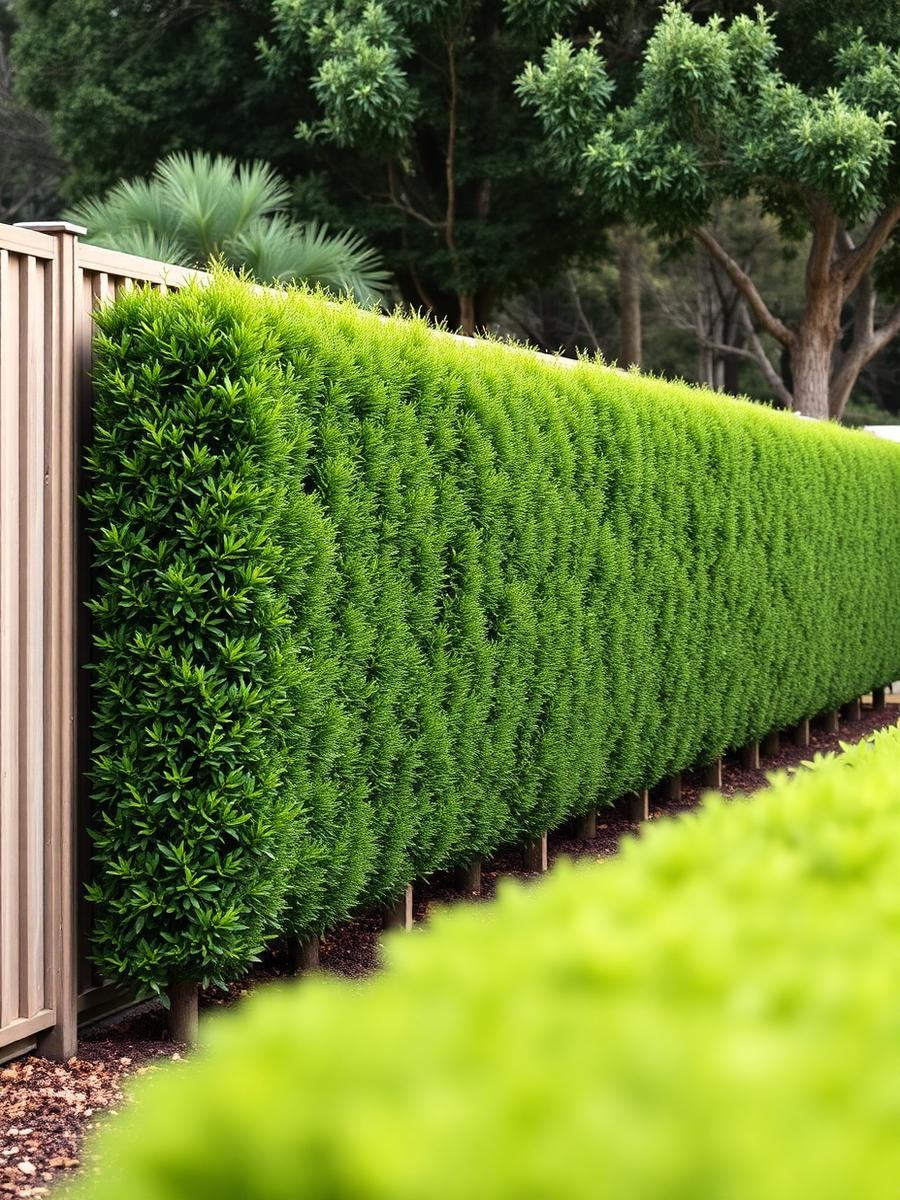
Hedge trimming across Pakenham and Cardinia for homes, strata and commercial sites — shaped to a string line, cut in the right season, with every clipping taken away the same day.
- Pricing
- Free, no-obligation quote
- Typical duration
- 2 – 6 hours
- Frequency
- 2 – 3 × per year
Free, no-obligation
Get your free hedge trimming quote
Tell us about your hedge and Samuel will get back to you, usually within one business day.
- Quick, personal response
- Fixed pricing, no surprises
- Honest, upfront communication
The benefits
What you get
Trim by eye and a hedge rounds off. Trim to a line and it fills in.
Denser every season
Trimmed to a line with a batter so light still reaches the base.
Agreed before we cut
Target height and face confirmed on site, since once it's off, it's off.
Clean site, same day
Tarps down, clippings bagged and gone by the time we leave.
How we approach it
Hedge Trimming, done to a standard
Trims that push thicker growth and hold their shape between visits.
Hedge trimming is shaping work, not just shortening work. We cut screens, formal hedges, topiary, boundary rows and low border plantings to an agreed height and face — with a slight batter, so the top sits narrower than the base and light still reaches the lower branches.
Species drives the method. Photinia, murraya, viburnum, lilly pilly, buxus, pittosporum, westringia and conifer screens all respond differently to how hard they're cut and when. We identify what you have, check its health, and cut back into old wood only where the plant will reliably reshoot.
Height management is agreed before the machines start. Once material is off it can't be put back, so we confirm the target height, the face line and how much you want to see over the top. Large reductions are staged across two seasons where a hard cut would leave bare timber exposed.
Safety and access are part of the quote. Boundary hedges near power lines, work above 3 metres, and anything overhanging a footpath or driveway is planned rather than improvised — platform or ladder work, spotters where needed, and every step confirmed before the cut starts.
What's included
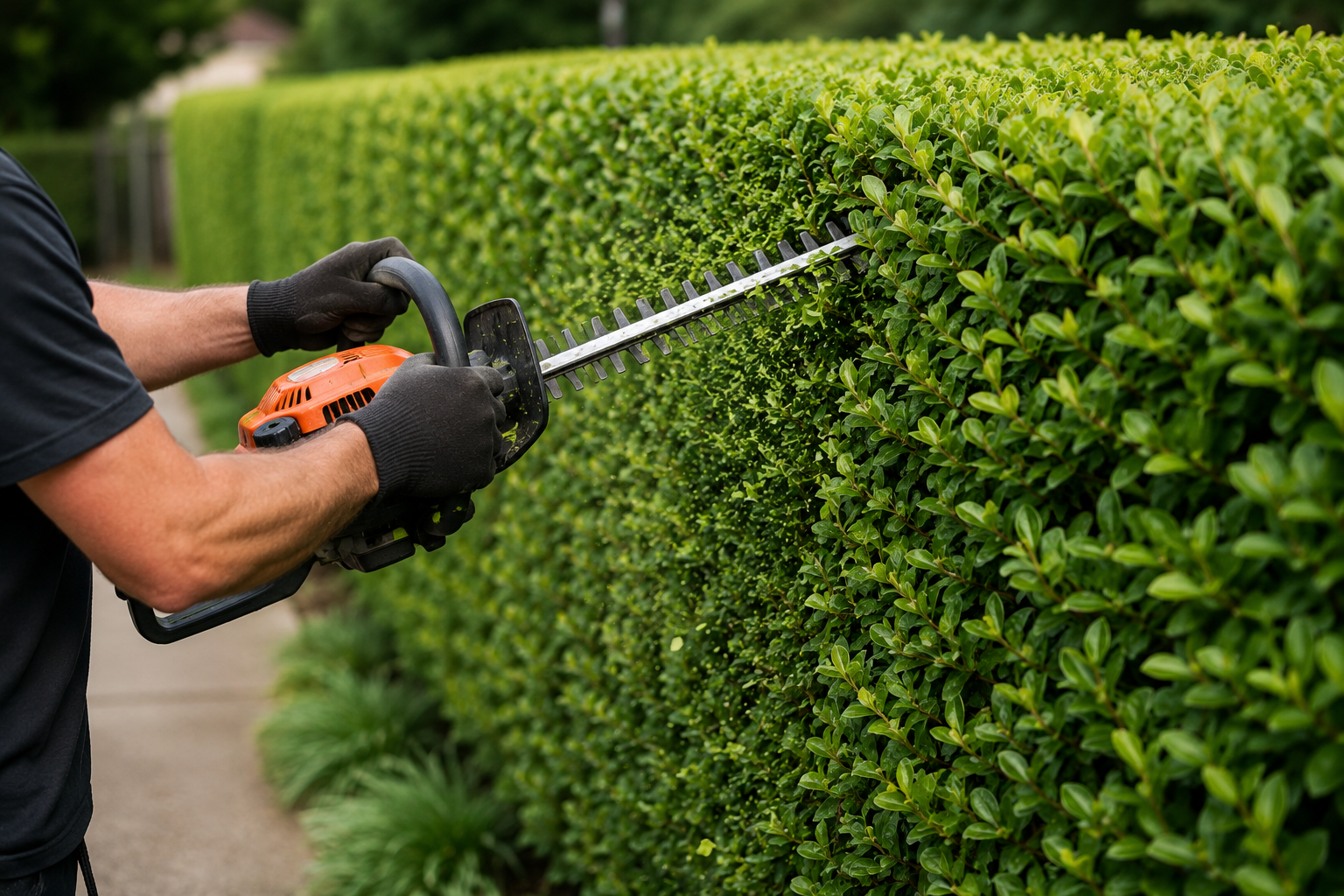
String-line shaping
True faces and level tops cut to a line, with a batter so the base keeps getting light and stays dense.
Height management
An agreed target height held visit to visit, or a staged reduction where a hedge has outgrown its position.
Sunlight and airflow
Interior deadwood and congested growth cleared so air moves through the plant and fungal problems ease off.
Formal and informal shaping
Squared screens, rounded forms, topiary balls, arches and low border hedges cut to suit the planting.
Access and safety work
Ladder and platform trimming to safe working height, with paths and driveways kept clear while we cut.
Health check
Scale, sooty mould, borer, myrtle rust and dieback flagged early, with a plain-English note on what it needs.
Full clean-up
Tarps down before we start, clippings raked out of beds and lawn, surfaces blown clean afterwards.
Green waste removed
All cuttings loaded and taken off site the same day — nothing left in a pile or stuffed into your bins.
Hedge health
Why regular hedge trimming decides how a hedge ages
A hedge is a group of plants being asked to behave like a wall. Whether it thickens into one or slowly falls apart comes down to how often it's cut and where the cut lands.
Every trim triggers branching behind the cut. Take the tips off a shoot and the plant responds with two or three new ones, so a hedge cut two or three times a year multiplies its growing points and knits into a solid face. Leave it two or three years and all the energy goes into a handful of long, whippy leaders — the face opens up, the interior hollows out, and you can see straight through to the fence.
Shape matters as much as frequency. A hedge cut with straight vertical sides, or worse a flared top, shades its own base; the lower branches lose light, drop their leaves and never come back without a hard reduction. Cutting with a slight batter — the top a touch narrower than the bottom — keeps sun on the full face and is the single reason well-maintained hedges stay green all the way to the ground.
Airflow does the rest. Congested, unthinned interiors hold humidity, and in a Victorian autumn that's how sooty mould, scale and fungal dieback take hold in lilly pilly and photinia screens. Clearing dead material through the middle lets air move, dries the foliage faster after rain, and keeps a screen looking healthy rather than tired. Timing ties it together: cut in late spring and early autumn and the plant has enough warmth left to push growth over the wounds before it slows down.
Denser, healthier growth
Frequent light trims create more branching than occasional hard cuts, so the face thickens instead of thinning.
Sunlight to the base
A battered face keeps light on the lower branches — the fix for hedges that have gone bare at the bottom.
Airflow through the plant
Clearing congested interiors reduces the humidity that fungal problems, scale and sooty mould thrive in.
Height kept under control
Holding an agreed height each visit avoids the severe reduction that leaves bare timber exposed for a season.
Safety around the property
Sightlines at driveways, clear footpaths and no growth crowding windows, gutters, meters or power lines.
Presentation and property value
A sharp, structured screen frames the house and is one of the first things valuers, buyers and tenants notice.
Common problems
The hedge problems we're called out for most
Almost every hedge enquiry we take is one of these. All of them are recoverable, though a few take a season or two of patience.
“It's grown far too tall to manage”
We agree a target height and bring it down — in one cut where the species allows, or staged over two seasons so it fills back in dense.
“It's bare and woody at the base”
Usually a shading problem. Re-cutting the face with a batter and thinning the top puts light back on the lower branches so they reshoot.
“You can see straight through it”
Long unchecked leaders instead of dense branching. Regular cuts multiply growing points and the face knits closed over a season or two.
“Leaves are sooty, spotted or dropping”
Typically scale, sooty mould or fungal dieback in a congested plant. We clear the interior for airflow and flag what treatment it needs.
“It's crowding paths, windows and driveways”
Faces cut back hard to the boundary line, sightlines at the driveway restored, and growth taken off gutters, meters and windows.
“The last trim left it rounded and uneven”
Cutting by eye rounds a hedge off. We re-establish a level top and true faces to a string line, then hold that line every visit.
Our method
Four steps, every job
Trim by eye and a hedge rounds off. Trim to a line and it fills in.
- 01
Assess
Species, health, position and how hard the plant can safely be cut this season.
- 02
Agree the line
Target height, face and any reduction confirmed with you on site before we start.
- 03
Trim
Top down to a string line, battered faces, staged where the reduction is significant.
- 04
Clear
Clippings tarped, loaded and removed, surfaces blown clean and the run checked end to end.
Indicative pricing
What it usually costs
Guide prices only — every quote is fixed to your property before anything is booked in.
Small hedge run
Up to ~10 linear metres at accessible height.
Quoted
Boundary hedge
20–30 metres, waste removed.
Quoted
Major reduction
Height reductions, mature screens and commercial sites.
Quoted
Where we trim
Residential and commercial hedge maintenance across Pakenham and Cardinia
From a single buxus border to a hundred metres of carpark screening, the standard is the same. The scheduling and paperwork around it changes.
Family homes
Front hedges, side screens and low borders kept in shape two or three times a year, with the waste gone the same day.
Privacy and boundary screens
Lilly pilly, photinia and pittosporum runs held at the height that keeps your yard private without shading the neighbours out.
Strata & body corporate
Entry hedges, carpark screens and boundary rows staged across two visits a year, so no site has its entire streetscape cut back at once.
Commercial properties
Business parks, retail frontages, schools and childcare centres trimmed outside operating hours where access allows.
Investment properties
Screens kept tidy between inspections without involving tenants, with photos sent and one invoice a month.
Agencies & display homes
Pre-photography and pre-inspection trims booked to your dates, including resets on properties that have been let go.
Why Knights Mowing
What separates a shaped hedge from a shortened one
Hedge work is permanent for a season. The care taken before the blades start matters as much as the cut itself.
We identify what you have
Buxus, photinia, lilly pilly, murraya, westringia and conifers all tolerate different cuts. The species sets the method, not the clock.
The line is agreed on site
Target height, face and how much reduction you want, confirmed before anything comes off. No surprises when you get home.
Cut to a line, not by eye
String lines for tops and faces, with a deliberate batter. It's slower, and it's why our hedges keep their shape between visits.
Sharp, sanitised equipment
Blades honed before every job and wiped down between properties, so a fungal problem at one site never travels to the next.
Safety planned, not improvised
Ladder and platform work assessed first, footpaths kept clear, and safety confirmed before the first cut.
Reliable scheduling
Seasonal trims booked ahead in a suburb-based run. If weather shifts a day, you hear the new one from us.
The site left spotless
Tarps down first, clippings out of beds and lawn, surfaces blown clean and all green waste removed the same day.
Honest about limits
If a hedge needs an arborist, staging over two seasons, or is better replaced than rescued, we'll say so rather than take the job.
Before and after the trim
All seven servicesAreas we service: Pakenham, Cardinia, Officer, Beaconsfield, Berwick, Clyde, Drouin, Warragul. See the full service area.
Free, no-obligation
Get your fixed-price quote
Tell us about your hedge and we'll get back to you, usually within one business day, with a clear fixed-price quote.
- Quick, personal response
- Fixed pricing, no surprises
- Honest, upfront communication
Ready when you are
Book a hedge trim with a clear quote up front
Tell us your suburb, roughly how many metres of hedge you have, and send a photo. We'll price it that day and book the season that suits the species. Shaped to an agreed line, every clipping taken away, and a screen that looks better each year instead of worse.